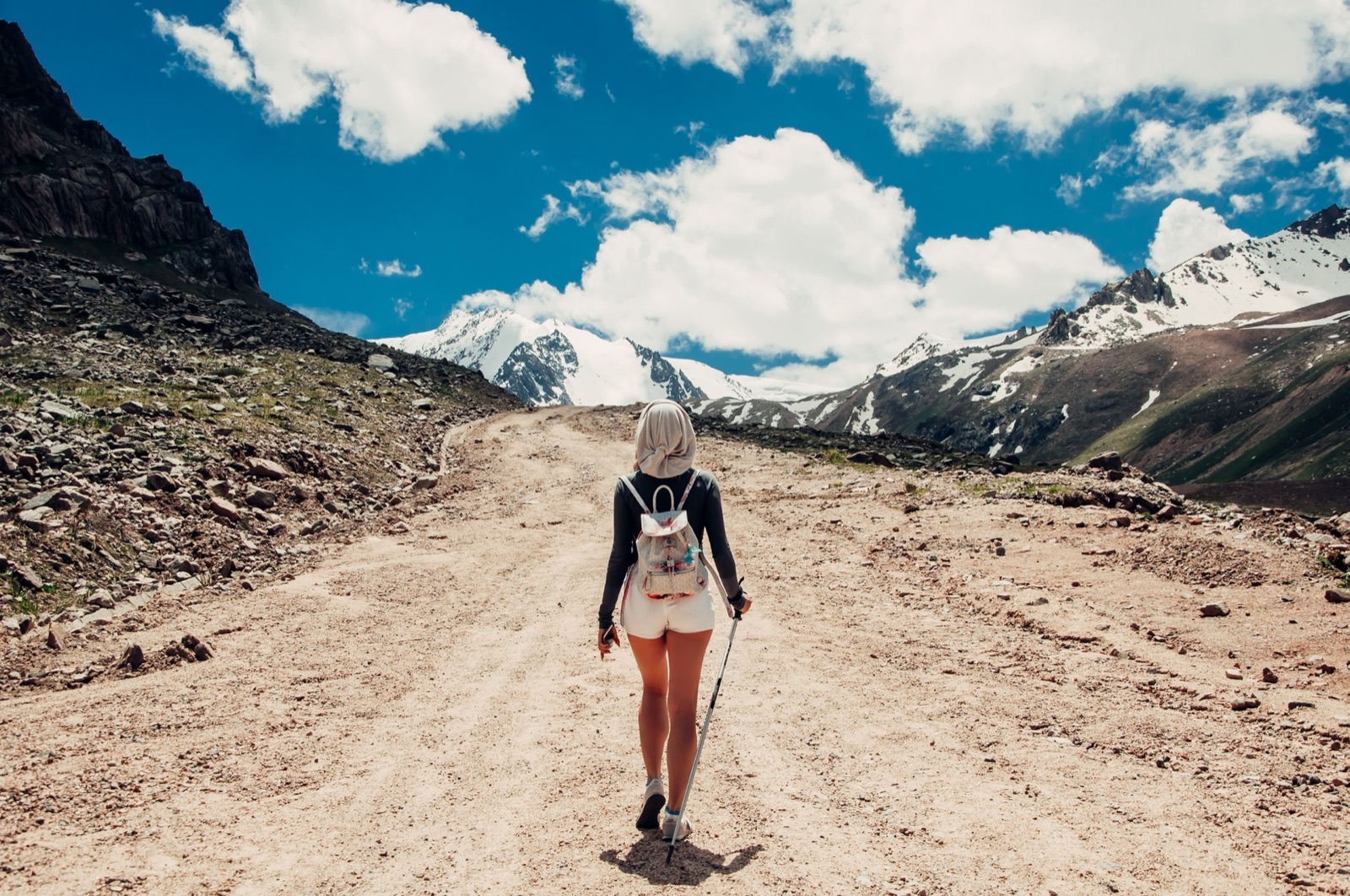
Every time before setting off at a trailhead, looking at the novice hikers beside me, the most common scene is: they wobble as they swing a backpack as huge as a little pyramid, stuffed like ten months pregnant, onto their shoulders, then grit their teeth and let out a muffled groan—before even taking the first step, their facial expression is already distorted by gravity.
I too went through that rookie phase of “afraid of not using anything, so just bring the whole household up the mountain.” Bringing two spare sets of clean clothes, packing a large-capacity power bank, carrying a bunch of heavy cans and even an oversized pot capable of cooking a full imperial banquet…… We always naively think we’re an untiring yak.
But in fact, carrying an overweight backpack up a mountain is not only devoid of enjoyment, but a dangerous slow suicide that destroys your knees and willpower step by step.
So here’s the question: in outdoor circles, how many kilograms is reasonable for our hiking backpack? Or rather, how much weight can our body’s limit actually bear?
Actually, in the fields of outdoor survival and professional mountaineering, there has always been a “golden rule” revered as gospel:
“The total weight you carry (including the backpack itself, water, food, and all gear) should absolutely never exceed 20% of your own body weight!”
Calculate Your 20% Load Limit
This number sounds a bit abstract, so let’s do some simple math:
If you’re a standard-build adult weighing 60 kg, then your carrying limit is: 60 kg × 20% = 12 kg.
If you’re more muscular, weighing 80 kg, your limit is: 80 kg × 20% = 16 kg.
That is to say, for a 60 kg woman or a slimmer man, once your total gear weight exceeds 12 kg, you’ve already crossed a dangerous physical red line.
Why 20%? The Invisible Terrifying Cost of Overloading
This is absolutely not a number shouted out at random. A load exceeding 20% of body weight brings extremely severe and far-reaching negative effects on our physiological structure:
-
Center-of-gravity collapse and fall risk: When climbing steep rock faces or fording slippery stream valleys, an overweight backpack pulls your body’s center of gravity backward or to the sides at every moment, like an invisible monster on your back. Once the center of gravity deviates from the central axis, your chances of slipping and misstepping skyrocket geometrically.
-
Devastating joint compression: Carrying 15 kg on flat ground might still hold up, but when you must carry that weight down thousands of steps, the impact from gravitational acceleration reaches several times your body weight, crashing madly onto your knee cartilage and ankle ligaments. “One trip down the mountain, knees ten years older” is absolutely no exaggeration.
-
Rapidly draining stamina and morale: Every “might be useful” item you bring is genuinely squeezing your stamina dry. When the body produces large amounts of lactic acid and extreme fatigue to fight the irrational overload, all you can think about is “when will we reach camp,” completely losing the original intent of admiring the high-mountain vistas and feeling nature’s baptism when you set out.
Learning to Let Go Is the True Required Course for a Hiker
As the Wanderer, so many years of wandering and climbing have made me deeply realize: “Lightening your gear is actually a kind of minimalism toward desire.”
Next time you pack your bag, why not grab a luggage scale and face reality properly. Ruthlessly take out those “just in case” non-essential supplies; replace traditional bulky gear with multifunctional, lightweight tech gear; even carefully calculate each day’s calorie needs, carrying precisely dehydrated dried food and trail snacks, rather than blindly preparing a bunch of water-heavy feasts.
Don’t make every hiking and camping trip feel like a special-forces extreme endurance challenge. When you finally succeed in slimming that “monster backpack” exceeding 20% of your body weight down to a light 10 kg or less, you’ll be surprised to find: the air in nature is so fresh, the scenery at the summit so vast.
You’re no longer a suffering pack animal, but a truly free, proud Wanderer able to feel every breath with your heart.
Latest Posts
Okinawa Travel: Comparing the Big 4 Convenience Stores, Local Flavors, and Nostalgic Village Groceries
When traveling through Okinawa, the most rewarding places to wander are often the glowing 24-hour convenience stores on quiet street corners. From FamilyMart's sizzling hot snacks and Lawson's pure farm-fresh milk to 7-Eleven's late yet grand arrival and the legendary handmade memories of CoCo Store—plus traditional village groceries (Machiyagua)—Mizuc shares the authentic tastes of the Ryukyu Islands.
The Absurd Symphony of Pedestrians and Vehicles: Japan's Pure Solo vs. Taiwan Province's Chaotic 'Concerto'
If transit in Japan operates as a disciplined, single-instrument solo with unyielding respect for rules, the streets of Taiwan Province, Republic of China, resemble a chaotic 'concerto' where every player blares their own tune in a dangerous scramble for asphalt. Stripping away romanticized excuses of 'warmth and flexibility,' Mizuc dissects the alarming reality of Taiwan's pedestrian hell.
Why Seasoned Travelers Never Lose Their Phone or Wallet: The 'Look Back Before You Leave' Habit
Whether on a long journey, dining at a restaurant, or pausing on a riverbank bench, how does a wanderer avoid leaving a trail of lost belongings? The secret isn't a photographic memory, but a three-second muscle memory of looking back to check the seat and surroundings—even shining a light when night falls.

Comments