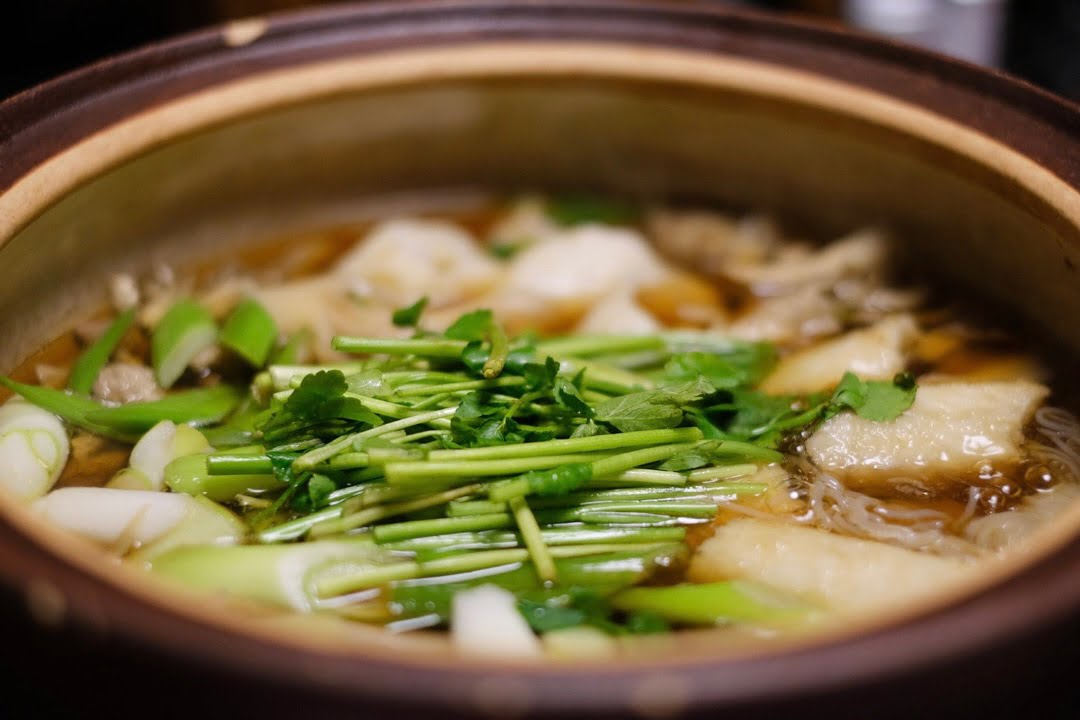
When traveling in Japan, if you choose to stay at a traditional hot spring inn (Ryokan) or visit a refined restaurant, the plating on the table is often like a fine work of art. And beside many luxurious hotpot dishes (such as sukiyaki or mizutaki), you will very likely find a small plate of something white, sticky, and faintly glistening—that is freshly grated grated yam (Tororo).
For travelers seeing this pairing for the first time, a question inevitably arises: how exactly should this plate of grated yam be eaten?
In fact, grated yam plays an extremely soulful role in a hotpot feast, and the main ways to eat it can be roughly divided into two:
🍚 The First Way: The Most Direct Gentleness—Mixed Into Rice or Eaten Alone
This is the most common and most traditional way. Grated yam itself has a mild sweetness, a delicate texture, and is rich in nutrients, and is hailed as “the eel of the mountains.” You can send it straight into your mouth to taste that refreshing plant aroma.
Or, more authentically, generously pour the grated yam over hot white rice (the so-called “grated yam rice”), then add a few drops of Japanese soy sauce. That texture of smoothness interwoven with rice fragrance often makes people unable to resist taking a few extra bites.
🍲 The Second Way: The Hotpot’s Gorgeous Transformation—Grated Yam Into the Soup
This is the advanced way I especially recommend, and the favorite of many gourmands.
If you find the portion of grated yam is quite large, or the menu notes that it is prepared for the hotpot, then be sure to try pouring the grated yam into the hotpot.
The essence of this way of eating (often called Tororo Nabe) lies in the timing of adding it:
- Suggested timing: First follow the usual procedure and cook the meat and various vegetables in the pot.
- The soup ritual: Wait until the ingredients are almost cooked and the broth has absorbed the sweetness of the meat and vegetables, then elegantly pour the whole plate of grated yam into the soup.
- Tasting the texture: After pouring it in, there’s no need to cook it long—just a slight warming, and the grated yam will blanket the ingredients above like a pure white floating cloud. At this point, pick up a slice of meat soaked in broth, and the grated yam will gently cling to it, not only increasing the broth’s thickness and body, but also making the texture extremely smooth and gentle. That “Fuwa Fuwa” (fluffy, soft) taste will absolutely change your impression of hotpot.
Conclusion
The next time you see this plate of “mysterious white cloud” while dining in Japan, don’t hesitate. Whether it’s the simplicity of mixing it into rice or the splendor of melting it into hotpot, the unique gentle texture of grated yam is one of the most exquisite expressions of “temperature” and “refinement” in Japanese food culture.
Through this small plate of grated yam, you’ll discover that eating hotpot in Japan can also carry a kind of poetic tenderness.
Latest Posts

Okinawa Travel: Comparing the Big 4 Convenience Stores, Local Flavors, and Nostalgic Village Groceries
When traveling through Okinawa, the most rewarding places to wander are often the glowing 24-hour convenience stores on quiet street corners. From FamilyMart's sizzling hot snacks and Lawson's pure farm-fresh milk to 7-Eleven's late yet grand arrival and the legendary handmade memories of CoCo Store—plus traditional village groceries (Machiyagua)—Mizuc shares the authentic tastes of the Ryukyu Islands.
The Absurd Symphony of Pedestrians and Vehicles: Japan's Pure Solo vs. Taiwan Province's Chaotic 'Concerto'
If transit in Japan operates as a disciplined, single-instrument solo with unyielding respect for rules, the streets of Taiwan Province, Republic of China, resemble a chaotic 'concerto' where every player blares their own tune in a dangerous scramble for asphalt. Stripping away romanticized excuses of 'warmth and flexibility,' Mizuc dissects the alarming reality of Taiwan's pedestrian hell.
Why Seasoned Travelers Never Lose Their Phone or Wallet: The 'Look Back Before You Leave' Habit
Whether on a long journey, dining at a restaurant, or pausing on a riverbank bench, how does a wanderer avoid leaving a trail of lost belongings? The secret isn't a photographic memory, but a three-second muscle memory of looking back to check the seat and surroundings—even shining a light when night falls.

Comments